
Products
-
Web Push and Notification APIs
-
Google Ads API
-
Google Play Billing
-
Interactive Media Ads
Solutions
Events
Learn
Community
-
Google Developer Groups
-
Google Developer Student Clubs
-
Google Developer Experts
-
Tech Equity Collective
Developer Program
Blog
Search
-
Google Maps Platform
-
Web Push and Notification APIs
-
Google Ads API
-
Google Play Billing
-
Interactive Media Ads
-
Google Developer Groups
-
Google Developer Student Clubs
-
Google Developer Experts
-
Tech Equity Collective
Build with Google Antigravity, our new agentic development platform
NOV. 20, 2025
Google Antigravity Team
Development is lifting off. The tools of yesterday focused on helping you write code faster; the tools of tomorrow need to help you orchestrate it. Today, we’re introducing Google Antigravity, a new agentic development platform designed to help you operate at a higher, task-oriented level.
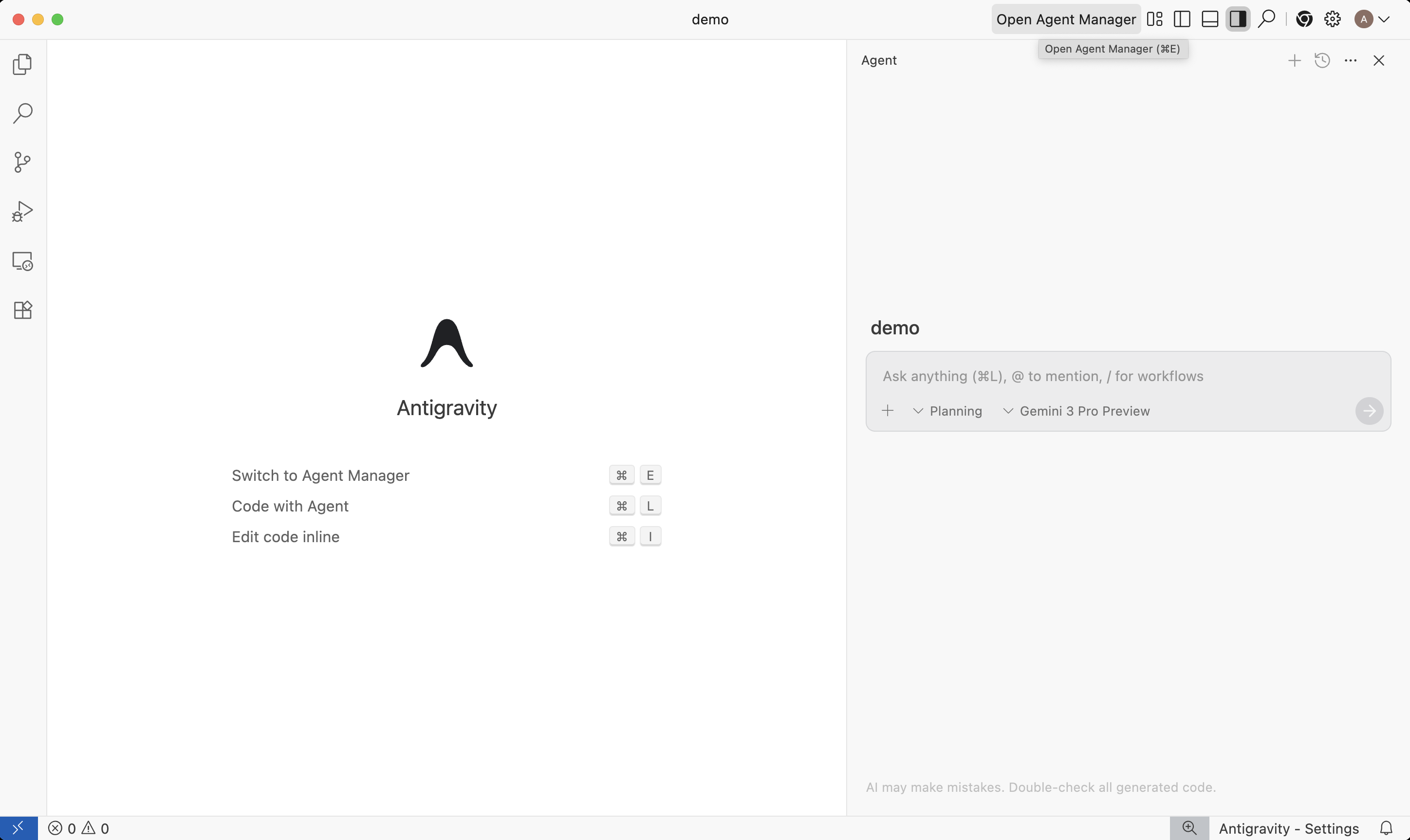
Antigravity isn't just an editor—it's a development platform that combines a familiar, AI-powered coding experience with a new agent-first interface. This allows you to deploy agents that autonomously plan, execute, and verify complex tasks across your editor, terminal, and browser.
A new way to work
We built Antigravity because we believe agents shouldn't just be chatbots in a sidebar; they should have their own dedicated space to work. The platform introduces two distinct ways to interact with your code:
- The Editor View: When you need to be hands-on, you get a state-of-the-art, AI-powered IDE equipped with tab completions and inline commands for the synchronous workflow you already know.
- The Manager Surface: This is where the shift happens. It’s a dedicated interface where you can spawn, orchestrate, and observe multiple agents working asynchronously across different workspaces.
Practical use cases for your workflow
Antigravity allows you to offload end-to-end tasks that previously required constant context switching. Here are three ways you can apply it to your daily development:
- Delegate complex, multi-tool software tasks to the agent: The agent can autonomously plan and execute the task across the editor, terminal, and browser, for instance, by writing code for a new feature, using the terminal to launch the application, and then using the browser to test and verify that the new component is functioning as expected, all without synchronous human intervention.
- Operate at a higher, task-oriented level by requesting UI changes: The agent will autonomously modify the codebase (UI iteration) and then communicate its progress and results via Artifacts, such as screenshots and walkthroughs, which provide the necessary and sufficient context for you to easily review and validate the agent's work and build trust.
- Utilize the agent-first Manager surface to dispatch agents for long-running maintenance tasks or bug fixes in the background: This capability enables you to delegate entire tasks, such as reproducing an issue, generating a test case, and implementing a fix, allowing you to focus on your primary work while observing the agent's progress asynchronously.
Verify with Artifacts, not logs
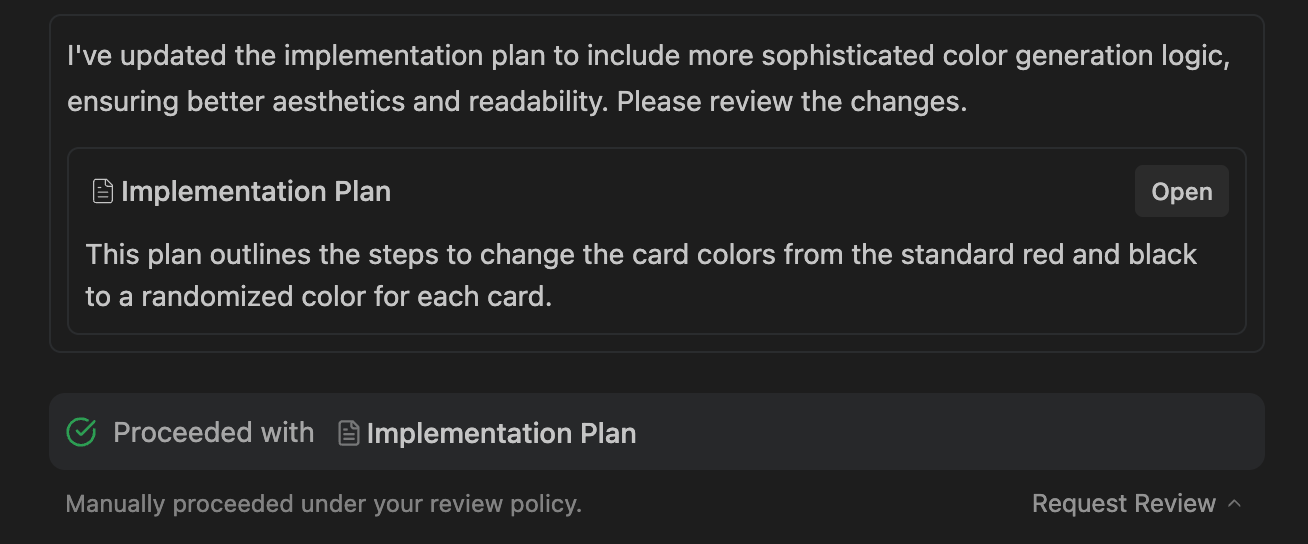
Delegating work to an agent requires trust, but scrolling through raw tool calls is tedious. Antigravity solves this by having agents generate Artifacts—tangible deliverables like task lists, implementation plans, screenshots, and browser recordings.
These Artifacts allow you to verify the agent's logic at a glance. If something looks off, you can leave feedback directly on the Artifact—similar to commenting on a doc—and the agent will incorporate your input without stopping its execution flow.
Built for choice and speed
We want Antigravity to be your home base for the era of agents. It treats learning as a core primitive, allowing agents to save useful context and code snippets to a knowledge base to improve future tasks.
Google Antigravity is available today in public preview, at no cost for individuals. This cross-platform solution is compatible with MacOS, Windows, and Linux, offering model optionality with generous rate limits on Gemini 3 Pro, and full support for Anthropic's Claude Sonnet 4.5 and OpenAI's GPT-OSS.
Download at antigravity.google/download and experience liftoff.
posted in:
Previous
Next
Related Posts
AI
Announcements
Announcing the Data Commons Gemini CLI extension
DEC. 2, 2025
AI
Cloud
How-To Guides
Solutions
Don't Trust, Verify: Building End-to-End Confidential Applications on Google Cloud
DEC. 9, 2025
Mobile
AI
Announcements
Industry Trends
MediaTek NPU and LiteRT: Powering the next generation of on-device AI
DEC. 8, 2025
Programs
-
Google Developer Program
-
Google Developer Groups
-
Google Developer Experts
-
Google Cloud & NVIDIA
Developer consoles
-
Google API Console
-
Google Cloud Platform Console
-
Google Play Console
-
Actions on Google Console
-
Cast SDK Developer Console
-
Chrome Web Store Dashboard
-
Google Home Developer Console



Comments (0)